Is this a factory‑sealed non‑replaceable lithium‑thionyl chloride battery?
If you source fire safety gear for resale, property projects or commercial fit‑outs, battery details will make or break your order. Have you ever gotten returns because end‑users tried swapping batteries on a sealed‑unit smoke alarm? Many importers ask us exactly the same question about our SR‑825PHS photoelectric smoke detector. Is its internal power source a factory‑sealed, non‑replaceable lithium‑thionyl chloride battery?
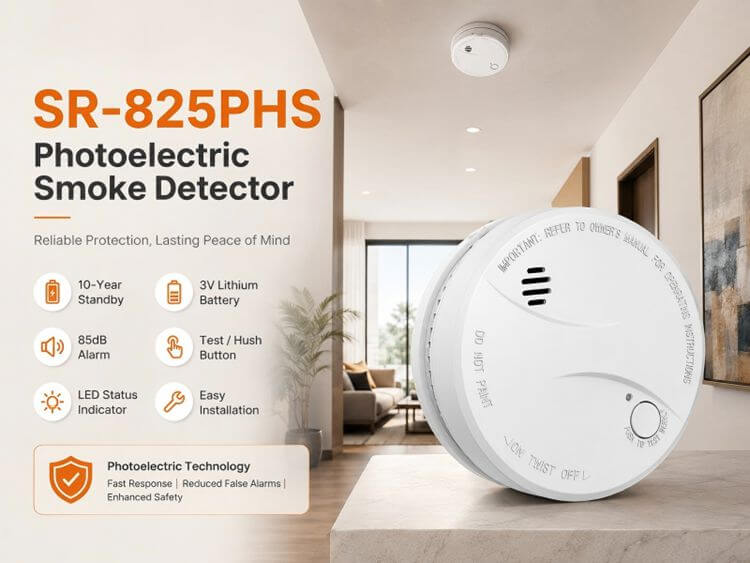
Let’s get that core question answered straight first. Yes. The SR‑825PHS runs on a factory‑sealed, non‑replaceable lithium‑thionyl chloride 3V battery built inside the unit at our Sumring production facility in China. You cannot pop open a compartment and put in a new battery. Once the cell reaches end‑of‑life after its rated 10‑year standby span, you replace the whole smoke detector unit.
You might ask: why lock the battery inside, instead of letting customers swap it out? It sounds inconvenient at first glance, right? Let’s think about real‑world field issues we have seen over more than 12 years manufacturing smoke and gas alarms for overseas markets.
Many cheap smoke detectors on the market come with user‑replaceable standard batteries. What happens in rental apartments, student housing or remote commercial buildings? People forget to test them. They pull out the battery to stop nuisance beeps and never put one back. Suddenly you have a fire safety device that does absolutely nothing when smoke shows up. That is a genuine risk for property managers and building owners.
Factory‑sealed lithium‑thionyl chloride cells remove that human error risk. The battery stays enclosed behind the device housing from assembly all the way through installation at the job site. No one can yank it out by accident or on purpose. This battery chemistry delivers ultra‑low self‑discharge, which explains the full 10‑year standby rating printed on SR‑825PHS datasheets.
Do not mix this up with common consumer lithium‑ion batteries you find in power banks or phone accessories. Lithium‑thionyl chloride cells are a specialty power source built for long‑term, low‑draw electronics like fire sensors. They do not get recharged. They are designed to sit idle for years, draw tiny amounts of power for sensor checks, and wake up fast to drive the 85‑dB alarm tone when smoke particles hit the photoelectric chamber.
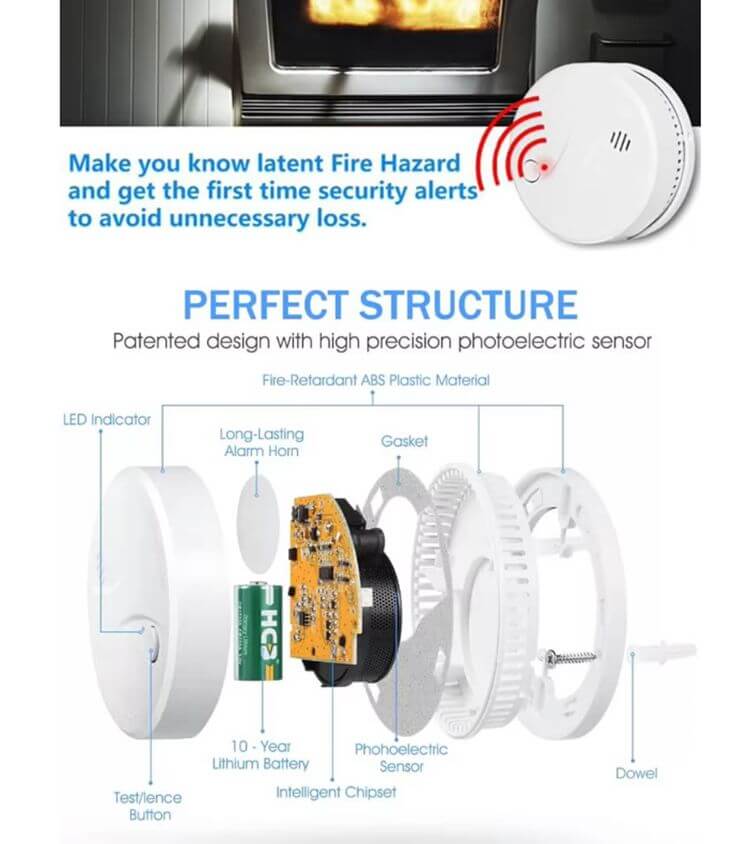
You know what trips up a lot of new buyers? They glance over the spec sheet and read “3V lithium battery”. Then they assume any off‑the‑shelf 3V battery can work as a spare. That assumption causes costly confusion later on. The SR‑825PHS battery is not a standard consumer CR‑series cell you grab from retail shops. It is a purpose‑built lithium‑thionyl chloride unit, pre‑installed and sealed inside during production. There is zero user access.
Let’s go over the practical specs tied directly to this battery setup on SR‑825PHS. The full standby lifetime is 10 years under normal indoor working conditions: temperature ranging from ‑10°C up to +50°C, relative humidity below 95% with no condensation. Alarm current sits at 35mA when the unit triggers full sound‑and‑flash alert. It is ceiling‑mount only, built around a high‑precision photoelectric sensor that cuts down false alarms from cooking fumes compared to older ion‑type detectors. The test/hush button is still fully functional for weekly routine checks; it does not open the battery housing at all.
We often talk to contractors who compare two options: sealed 10‑year units versus detectors with change‑out batteries. Each one fits different project requirements.
If your project targets multi‑unit rentals, holiday apartments, small retail shops or social housing, SR‑825PHS with sealed lithium‑thionyl chloride battery makes total sense. Property teams will not need to schedule annual battery swap visits. Once you mount these units to ceilings, they run unattended for a full decade. Just remind building staff to run the test button periodically and replace the complete alarm when the low‑battery chirp starts.
On the flip side, if your customer base strongly prefers field‑serviceable alarms with user‑replaceable power, this exact SR‑825PHS model will not fit that brief. That is not a product defect; it is an intentional design choice made for specific use‑cases. It pays to share that detail with your end‑clients before shipment, so no one gets surprised when they cannot open the battery compartment.
Over our years shipping fire‑safety products across many global regions, we run into one repeated misunderstanding. Some buyers think “sealed battery” equals “zero maintenance forever”. That is not true. Even with a 10‑year sealed lithium‑thionyl chloride cell, users still need to press the test button every few weeks. Dust can gather over the photoelectric sensor window over months and years. Light cleaning with a soft dry cloth keeps detection performance consistent. The sealed battery removes battery‑swapping chores, yet it cannot skip basic device upkeep.
Have you thought about inspection compliance for imported stock? When local safety inspectors look over SR‑825PHS installations, they will check that installers understand the non‑replaceable battery design. Project documentation needs to clearly note that the whole unit must be replaced once the 10‑year service window expires. If your installation teams wrongly tell building owners they can change batteries, that creates confusion during site audits.
What about failure warnings? The SR‑825PHS monitors its sealed lithium‑thionyl chloride cell automatically. When remaining power drops to critical levels, the unit sends short periodic chirps, paired with LED indicator flashes. This low‑power alert gives site managers enough lead time to arrange for full unit replacement. There is no workaround; you cannot silence the low‑battery warning permanently. It signals that the end of service life is near.
Let’s touch on another point many wholesale buyers care about: storage. Since the battery is factory‑sealed inside each SR‑825PHS unit right off our production line, warehouse storage conditions matter. Keep cartons in cool, dry indoor storage. Do not stack them in unventilated hot containers for long stretches. Even high‑quality lithium‑thionyl chloride cells will experience faster self‑discharge if stored at extreme temperatures for months on end. Good warehouse habits preserve the full 10‑year usable lifetime once devices get mounted.
You might wonder: can Sumring supply modified versions with accessible replaceable batteries for special tenders? We can review custom‑model requests for large‑volume projects, though the off‑the‑shelf SR‑825PHS SKU you see on product datasheets always ships factory‑sealed non‑replaceable lithium‑thionyl chloride battery as standard.
At Sumring, we have manufactured fire and gas detection hardware for global importers for more than 12 years. We know how frustrating spec mismatches become after goods land at your port. That is exactly why we lay out battery chemistry, sealing status and end‑of‑life rules plainly on datasheets, product images and pre‑sales communications. Our goal is for our distribution partners to have clear facts they can pass straight to installers and end‑customers.
If you are evaluating SR‑825PHS for your next bulk order and still have questions around battery performance, compliance documentation or volume pricing, reach out directly to our sales team. We are ready to share full datasheets, test reports and clear guidance so you can move forward with confidence.
Frequently Asked Questions
Q1: Can I open SR‑825PHS housing to swap out its lithium‑thionyl chloride battery?
A: No. The battery is factory‑sealed and non‑replaceable. Opening the detector housing voids unit performance and safety; replace the full smoke alarm at the end of its 10‑year life cycle.
Q2: How long does the built‑in lithium‑thionyl chloride battery last in SR‑825PHS?
A: Rated for 10‑year standby under standard indoor conditions ‑10°C to +50°C, ≤95% non‑condensing humidity. Actual service span may shift based on storage and operating environment.
Q3: Is SR‑825PHS battery a standard retail‑buyable CR lithium cell?
A: No. It is a dedicated lithium‑thionyl chloride cell for fire‑alarm hardware. Standard consumer 3V cells cannot substitute for this internal component.
Q4: What do I do when SR‑825PHS starts low‑battery chirping?
A: The chirp signals end‑of‑life for the sealed battery. You will need to install a complete new SR‑825PHS smoke detector unit. No battery‑swap fix exists.
Q5: Does sealed‑battery design affect weekly testing on SR‑825PHS?
A: Not at all. Use the front‑mounted test/hush button for regular function testing as you would with any smoke alarm. This button does not grant access to the internal battery.
Need verified datasheets, certification copies or sample testing for SR‑825PHS? Get in touch with Sumring today. Our technical team will send you full product documentation, competitive bulk pricing and custom project support to match your target market requirements.
Latest posts
-
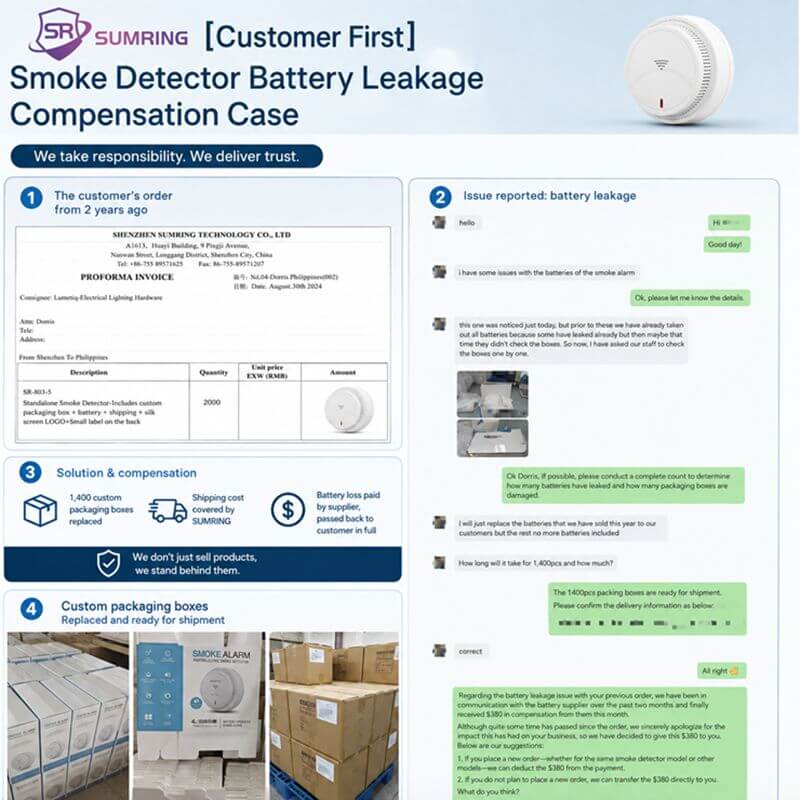 What Happens When Smoke Detector Batteries Leak? Real‑World Case From Sumring
Do you like ?0
Read more -
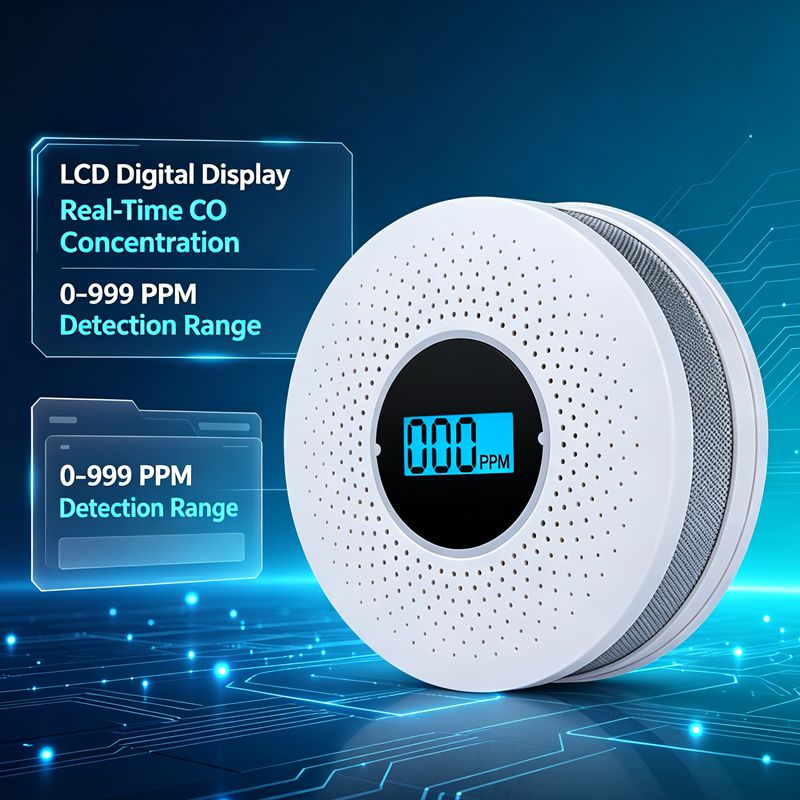 Does Smoke & CO Alarm Reactivate Instantly When Hazards Spike In Hush Mode?
Do you like ?0
Read more -
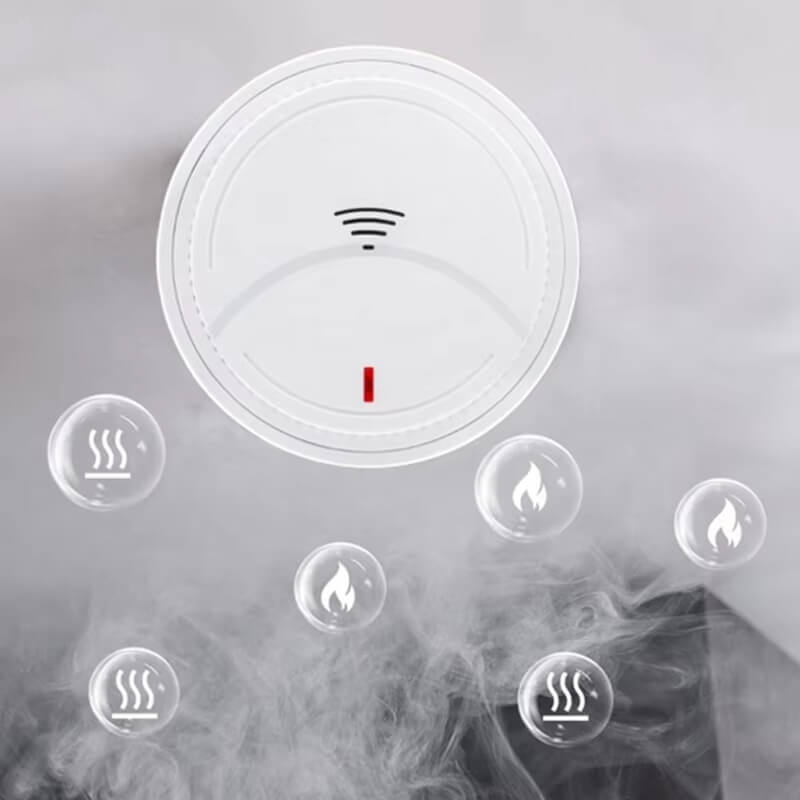 How Do Fire Smoke Alarms Operate? Key Types, Advantages & Practical Usage Tips
Do you like ?0
Read more -
 How Do Fire Smoke Alarms Work? A Complete Guide to Types, Pros & Usage Tips
Do you like ?0
Read more -
 Fire Smoke Alarm: Guide to Installation & Maintenance for Home Fire Safety
Do you like ?0
Read more -
 Why You Need a Smoke and Carbon Monoxide Combo Detector in Your Home ?
Do you like ?0
Read more
Search
Hot Product