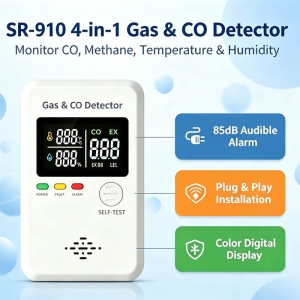
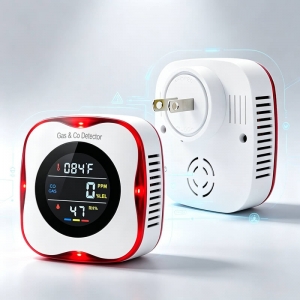
4-in-1 Plug-in Natural Gas & CO Detector: Methane Leak Alarm for Safer Home
Gas leaks are one of those dangers that don't make a lot of noise until it's too late. You can't always see them, smell them clearly, or tell how bad they've gotten. Yet they sit quietly in kitchens and boiler rooms, waiting for a spark. That's why having a detector that watches the right things matters so much. And it's why we want to show you a 4-in-1 plug-in natural gas and carbon monoxide detector from our Sumring factory in Shenzhen. No fluff, just a real look at what it does and why it belongs in your catalogue.
Let's start with the obvious question. Why 4-in-1? Because the dangers in a home don't come in one flavour. A kitchen can face a methane leak from the stove line, a slow build-up of carbon monoxide from a faulty water heater, and uncomfortable shifts in temperature and humidity that hint at bigger problems. Most basic alarms cover one thing and call it a day. This unit keeps an eye on all four, so your customers get a single device that does the job of several.
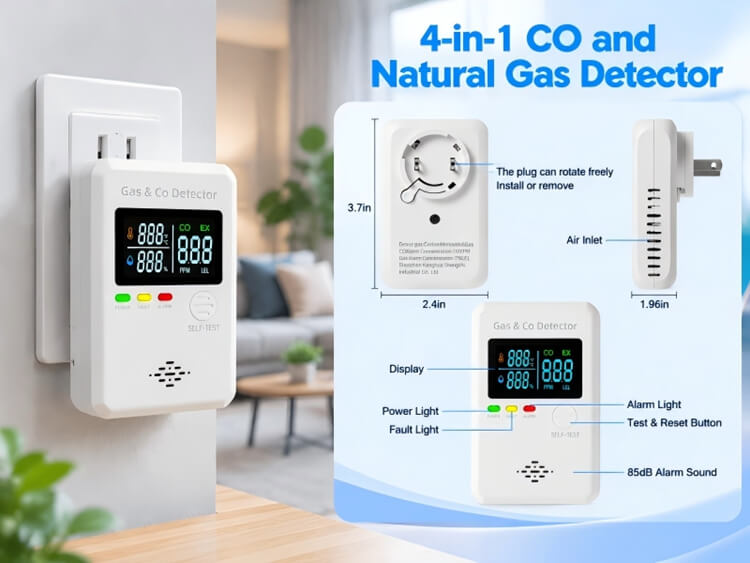
The heart of it is the gas sensing. This detector tracks combustible gas, think natural gas and methane, and carbon monoxide at the same time. That pairing is more useful than it sounds. Natural gas is often the fuel that powers the cooker. CO is the silent killer from incomplete combustion. A detector that catches both gives homeowners a much fuller safety net than a single-purpose alarm ever could.
Now here's the part that makes people smile: it's a plug-in design. No drilling holes, no pulling wires, no calling an electrician. The unit plugs straight into a wall socket, and the plug rotates freely so it fits whichever way the socket is mounted. For renters, landlords and anyone who hates messy installations, that's a genuine relief. You buy it, you plug it in, you're protected. Simple as that.
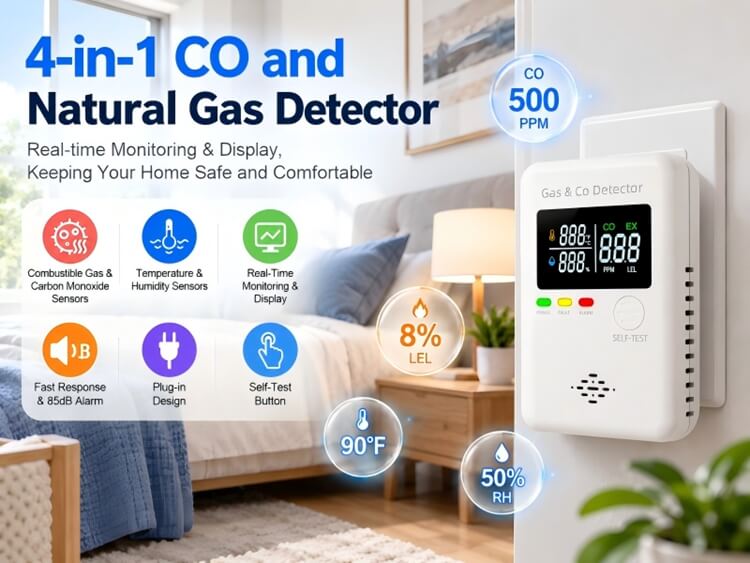
The display is where this detector earns its keep too. It comes with a screen that shows live readings, so people aren't just waiting for a siren. They can see the carbon monoxide level, the temperature, the humidity and the gas reading right there on the device. That's real-time information that turns a vague worry into something you can actually act on. Instead of wondering if something's off, you can see the numbers and decide.
You might be thinking, sure, a display is nice, but what happens when there's a real leak? Glad you asked. This unit doesn't hide in the corner. It fires off an 85dB alarm, loud enough to cut through kitchen noise and wake people up if they're asleep. That alarm volume is a practical safety feature, not a gimmick. You want a warning you can actually hear, not a polite suggestion you might miss.
There's also a self-test button on the device. That's a small thing that makes a big difference in the real world. People forget to maintain alarms. They install them, then ignore them for years. A one-press self-test lets anyone check the detector quickly, without tools and without waiting for a technician. Property managers can run through all the units in a building in minutes, which keeps everything verified and code-ready.
Let me explain the four readings a little more, because buyers often want to know what they're paying for. First, carbon monoxide in PPM, so users see how much CO is floating around. Second, combustible gas as a percentage of LEL, the lower explosive limit, which tells you how close the air is to being dangerously flammable. Third, temperature, and fourth, relative humidity. Together, those four numbers paint a clear picture of the indoor environment, not just one slice of it.
Why do temperature and humidity matter in a gas detector? Because they help you spot problems early. A room that's heating up oddly or getting too damp can point to ventilation issues or appliance trouble before a full leak shows up. For homeowners, that extra context is genuinely useful. It's not filler. It turns the detector into a little environment watchman, not just a leak alarm.
Let's be honest about what your customers are really paying for. Peace of mind. They want to cook dinner, run the heating and go to bed without lying awake wondering if something's leaking. A reliable multi-gas detector is how they buy that peace of mind. And for you as a supplier, offering a product that actually delivers that is how you build repeat customers instead of one-time sales.
Now, a word on quality. Gas safety is not the place for corner-cutting. A sensor that drifts, a false alarm that gets ignored, or a detector that goes silent when it matters, any of those can end badly. Sumring has run a fire and gas alarm manufacturing base in Shenzhen for more than 15 years, registered back in 2014. We hold the SUMRING trademark, operate under ISO9001 standards, and our fire and gas products carry CE and RoHS certification. We build and test our devices in our own plant, with a skilled team focused purely on fire and security alarms.
Installation simplicity is a selling point, and we've already covered the plug-in design. But there's more to it. Because there's no wiring and no wall mounting, this detector works for a wide range of buyers. Homeowners love it. Landlords love it because they can install it in a rental unit without damaging the walls. Small business owners, guest houses and serviced apartments all find it handy. That broad appeal is exactly what you want when you're choosing which products to stock.
Here's a practical tip for your buyers. Where should they plug it in? For gas detection, close to the kitchen appliance or the gas line is a good start. For CO, near sleeping areas or where a fuel-burning device runs. And remember, follow the product instructions and local codes for placement. A detector that's in the wrong spot is a detector that's not doing its job.
Let me give you a quick checklist when you're evaluating a gas and CO detector for your range. Check what gases it detects, confirm it reads both CO and combustible gas, look at the alarm volume, see if there's a self-test function, and make sure the certification matches your destination market. Get those right and you're offering something genuinely solid.
Some buyers ask whether they should offer single-gas alarms instead of a 4-in-1. There's a case for both, honestly. A simple unit is cheaper and does one thing well. But the 4-in-1 saves space, reduces clutter, and covers more risks with one purchase. For most homes, the convenience and extra coverage are worth it. It's about giving your customers options that fit their actual needs.
Our range doesn't stop at gas detectors either. Sumring also makes smoke detectors, heat detectors, manual call points, alarm bells, strobe sirens and emergency lights. If you're consolidating suppliers, we can act as a one-stop factory for much of your fire and gas safety needs. Fewer vendors to manage, simpler communication, smoother bulk shipments.
And yes, we support OEM and ODM work. If you want your own brand on the detector casing or custom packaging for your market, we can arrange that for bulk purchases. Many of our long-term partners rebrand our detectors and sell them across Europe, Southeast Asia, the Middle East and beyond. Custom options let you build a product line that feels like your own.
FAQ
- What does a 4-in-1 gas and CO detector monitor? It detects combustible gas (natural gas and methane), carbon monoxide, temperature and humidity in real time, giving a fuller picture of the indoor environment than a single-purpose alarm.
- How is this plug-in gas detector installed? It plugs directly into a standard wall socket and needs no wiring or wall mounting. The plug rotates freely to fit the socket orientation, so installation takes seconds.
- What happens when this detector senses a gas leak? It triggers an 85dB alarm, loud enough to cut through kitchen noise and wake sleepers, so occupants know to act immediately.
- Why does this detector show temperature and humidity? Temperature and humidity readings help spot ventilation or appliance problems early, turning the detector into a broader environment monitor rather than just a leak alarm.
- Can Sumring provide OEM branding for this gas and CO detector? Yes, Sumring supports OEM and ODM orders, including custom logo printing on the detector casing and custom packaging for bulk purchases.
So where do you go from here? If you're evaluating plug-in natural gas and carbon monoxide detectors for your product line, or you just want to compare options before committing to a bulk order, Sumring's team is ready to help. We can send product datasheets, certification documents, sample units and OEM details so you can test the performance yourself. Reach out to our sales team, and let's find the right gas safety solution for your market.
Search
Hot Product