Does This WiFi Gas Detector Work With Valve Actuator For Automatic Gas Shut‑Off?
You know what? Plenty of commercial kitchen buyers and facility managers reach out with this exact question. When you shop for a WiFi‑enabled gas leak detector, you do not just want phone push alerts. If a dangerous gas leak pops up while no staff is on‑site, a phone notification alone won’t stop disaster. You need hardware that can trigger an automatic gas shut‑off valve right away.
Many first‑time purchasers get confused here. Some WiFi gas detectors only send mobile app warnings. They have no physical signal output to talk to a valve actuator. That is a big problem for restaurants, hotel kitchens, and other commercial spaces where gas safety rules are strict. So can the SR‑912W smart WiFi gas detector pair with a valve actuator to cut gas flow automatically? Short answer: yes, and let’s walk through exactly how it works.
What Is a Valve Actuator, In Simple Terms? Let me break this down plain and simple. A valve actuator is the motor‑driven device mounted onto your gas pipeline shut‑off valve. Once it gets an electrical trigger signal from your gas detector, it physically twists the valve closed, cutting off gas supply within seconds.
Think of it like this: your gas detector is the nose that sniffs out dangerous LPG or combustible gas. The valve actuator is the hand that turns off the tap the second danger shows up. WiFi app alerts notify you remotely, but that cannot physically touch your gas pipe. Without relay output, your smart detector can only yell for help over your phone. It cannot take direct action. That distinction trips up a whole lot of importers.
Not every WiFi gas detector carries built‑in relay output. Lots of low‑cost models on global marketplaces only run WiFi communication for app notifications. They skip the hardware terminals needed to wire to actuators. That is one key detail you must check before you place any bulk order.
How SR‑912W Connects To Gas Valve Actuators ?The SR‑912W smart gas and LPG leak detector from Shenzhen Sumring Technology Co., Ltd. comes with hardware relay output terminals built‑in. This is not an add‑on accessory you have to buy separately. Right out of the box, you can run wiring between these terminals and your gas valve actuator. When the unit detects combustible gas hitting alarm thresholds, two things happen at the same time.
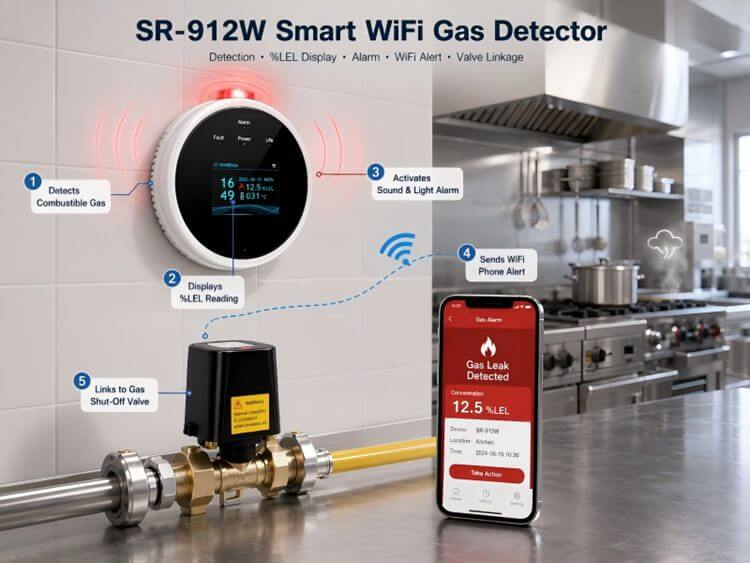
First, local onsite alarms activate: loud human‑voice audio prompt and bright flashing light. Second, the relay triggers and sends a signal straight to your connected valve actuator. The actuator immediately closes the gas supply valve. At the exact same moment, Tuya WiFi pushes emergency alarm alerts to your mobile phone, no matter where you are.
You do not need complicated gateway hardware to make valve linkage function. The physical wired relay connection handles the shut‑off function locally. That is a huge plus. If your building WiFi goes down, automatic valve shut‑off still works. The phone remote notification will fail without internet, but your critical safety response still runs. How many smart gas devices can say that? A lot of buyers overlook this critical edge case. If internet drops during a gas leak, you still want safety hardware to do its job.
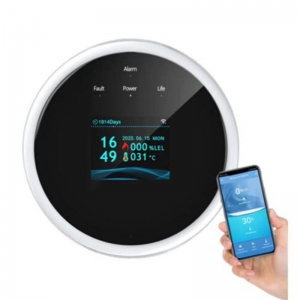
This unit reads gas concentration in real‑time with %LEL readings displayed clearly on its LCD screen. Detection range sits at 0‑100% LEL. Its sensor boasts a five‑year service life. CE and RoHS certifications are in place for global market imports. Manufactured by Sumring, a Shenzhen‑based fire and security factory established back in 2014, with more than 15 years of hands‑on industry experience. Their product portfolio covers smoke detectors, carbon monoxide alarms, full fire alarm systems and manual call point protective covers, serving overseas buyers across dozens of countries.
Real‑World Use Cases: Where Automatic Valve Shut‑Off Matters Most Say you run a busy commercial restaurant kitchen. Staff clock out for the night. A gas line fitting slowly starts leaking. Without automatic shut‑off, your WiFi detector sends you a phone alert. But if nobody sees that notification overnight, risk builds up. When SR‑912W links to a valve actuator, gas gets shut off instantly, before hazards escalate.
Hotel back‑of‑house kitchens, cafeteria facilities, and shared commercial cooking spaces face identical risks. Even small retail spaces with gas‑powered equipment gain massive safety value from this linkage.
Residential users can benefit too, yet most of our bulk inquiry comes from B2B procurement clients. Importers, system integrators and building contractors frequently ask us to confirm relay compatibility before project tender submissions. Building inspectors in many regions look favorably on setups that deliver automatic mitigation, not just warning signals.
Common Mistakes Buyers Make When Pairing Detectors & Valve Actuators Let’s talk about mistakes we see time and time again from overseas purchasers.
First mistake: Assuming every WiFi gas detector supports valve actuator control. Just because a product lists smart app remote monitoring does not mean it includes relay output for valve hardware. Always ask for terminal block diagrams and technical datasheets before sample orders. Do not rely only on marketing product pictures.
Second mistake: Mixing up voltage specifications. Your gas valve actuator needs to match the relay output specs of your gas detector. SR‑912W relay contacts support external actuators with matching voltage requirements. Double‑check voltage parameters on both pieces of hardware, or the linkage will not perform as expected.
Third mistake: Believing WiFi can operate valve actuators wirelessly. You cannot simply pair most standard gas valve actuators over WiFi. The safety shut‑off function needs a hard‑wired relay signal. WiFi is for remote alerts, not physical valve control. Quite a few customers get misled by misleading product listings online.
Fourth mistake: Skipping field testing after installation. Once you finish wiring SR‑912W with your actuator, run a full function test. Confirm the valve physically closes when alarm triggers. Do not assume wiring work works perfectly on first pass.
What Else Can SR‑912W Bring To Your Projects? Beyond valve actuator linkage, this device packs extra practical features for commercial deployments. The color LCD screen shows live %LEL gas readings, ambient temperature, clock status, fault reminders and sensor remaining service life. Human‑voice audio prompts clearly tell users what kind of event is taking place, not just a generic beep sound.
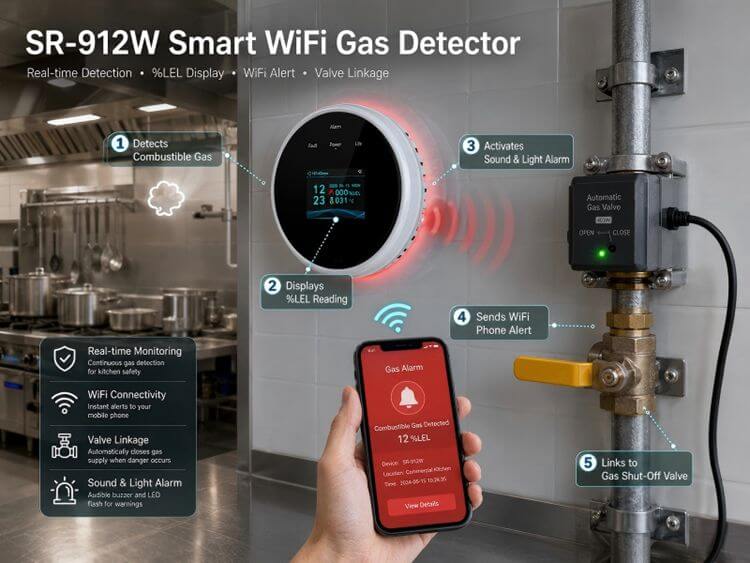
Wall‑mount design keeps installation straightforward for technicians. You monitor device status remotely via the Tuya mobile application. You can view historical event logs from anywhere. Even with all these smart functions, it still prioritizes local hardware safety responses. WiFi is an added convenience layer, not the core of its safety operation.
If you are sourcing for resale, system integration jobs or building projects, sample testing makes total sense. Hands‑on evaluation lets your technical team verify relay output performance, valve linkage behavior, and overall build quality before large‑volume orders.
FAQ
Q1: Does SR‑912W WiFi gas detector work with third‑party gas valve actuators?
A1: Yes, it works with most compatible gas shut‑off valve actuators via its built‑in relay output terminals. Always cross‑check voltage specifications for your actuator hardware before wiring.
Q2: Will automatic valve shut‑off still work if WiFi internet disconnects?
A2: Absolutely. Valve actuation runs over local hard‑wired relay signal. WiFi only handles mobile phone push notifications. Safety response keeps running even without network access.
Q3: Can I use SR‑912W for commercial restaurant kitchen installations?
A3: Yes. This model fits commercial kitchens, hotel facilities and residential sites alike. It carries CE and RoHS certification for global market import.
Q4: Do I need extra modules to activate relay output for valve actuators?
A4: No extra modules required. Relay output terminals are built‑into SR‑912W unit from factory. You only need suitable wiring and matching gas valve actuator hardware.
Q5: What gas types can this detector monitor?
A5: SR‑912W detects LPG and other common combustible gases, showing real‑time %LEL concentration values on its local display screen.
If you are evaluating gas safety hardware for your next project and want clear technical details, sample availability or bulk quotation, reach out to Sumring. As a China‑based fire‑security manufacturer active since 2014, our team can walk you through wiring guidance, certification documents and project‑specific support for gas detector and valve actuator combined solutions. Drop us your inquiry today.
Latest posts
-
 Protective Cover SR‑A08‑PS: Real Saudi Arabia OEM Custom Project From Sumring
Do you like ?0
Read more -
 Can Commercial Kitchen Gas Detectors Output Relay Signals to Connect Gas Valves
Do you like ?0
Read more -
 What Does a Solenoid Valve Do With a Gas Detector, Anyway?
Do you like ?0
Read more -
 Is this gas detector suitable for home kitchens? A Complete Buying Breakdown
Do you like ?0
Read more -
 A Late-Night Gas Scare: How One Smart Gas Detector Saved a Family’s Home
Do you like ?0
Read more -
 WiFi Gas Alarm: The Lifesaver That Saved a Family from a Silent Gas Disaster
Do you like ?0
Read more
Search
Hot Product