If you shop for fire safety gear for your clients, you know one hard truth. A cheap detector that fails during a real emergency is not just wasted money. It puts lives at risk. That’s why smart procurement teams don’t only look at spec sheets. They want to see how products get tested, before they leave the factory floor. Today we take you straight inside Sumring’s production workshop to watch our smoke and carbon monoxide combined detector go through our full testing workflow. Our model SR-821THS is the star here, the dual alarm unit that picks up both smoke from fires and invisible carbon monoxide gas.
You know what makes carbon monoxide so dangerous? You can’t smell it, see it, or taste it. It creeps out from faulty heaters, gas boilers, and blocked chimneys. Many standard smoke alarms miss this hazard entirely. On the flip side, a CO-only detector will not warn you when a fire starts and smoke fills a room. That is exactly why our SR-821THS pairs two separate sensors inside one compact round casing. It uses an electrochemical sensor for carbon monoxide and an infrared photoelectric sensor for smoke. The small LCD screen on the front shows real-time readings of CO levels, so users can check conditions at a glance. It runs on three 1.5V AA batteries, which means it keeps working even if mains power cuts out during a fire.
But great hardware means nothing without strict testing. Lots of factories just assemble parts and pack them up quickly. Sumring has operated our fire alarm manufacturing base in Shenzhen for more than 15 years. We registered back in 2014, and our whole site runs under ISO9001 quality rules. Every single SR-821THS unit goes through multiple rounds of checks before packaging. Let me explain what that actually looks like day to day on our production line.
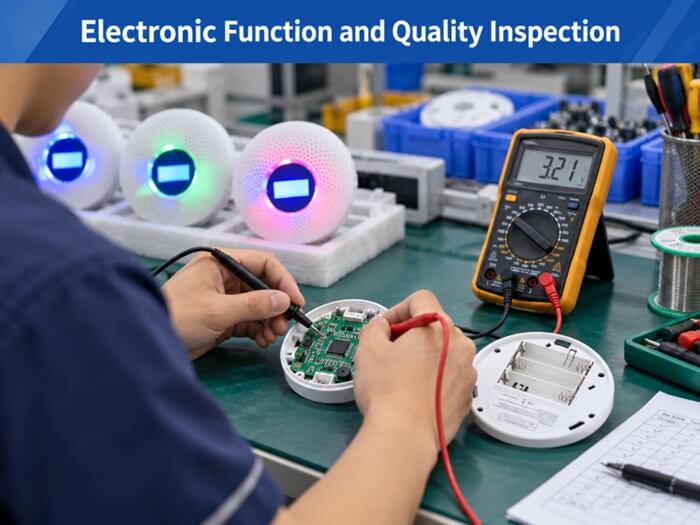
First comes the electronic function and quality inspection stage. Our technicians take the bare circuit board out of the shell. They hook the board up to multimeters and test points to verify current draw, voltage stability, and sensor response. The quiescent current for this model stays below 80uA, which keeps battery life long for end users. The alarm current sits under 30mA. Every circuit board must pass this power check before we fit the white plastic housing. If any board has unstable readings, we pull it right off the line. It never moves to the next step.
After the circuit board passes, workers assemble the full detector unit. Then we move to smoke and CO alarm factory testing. This is the stage many suppliers skip or rush through. Our staff place each finished SR-821THS on dedicated test rigs. The rigs feed calibrated smoke and controlled CO gas concentrations toward the detector. We test across the full detection range: CO from 0 up to 999 PPM, and smoke sensitivity between 0.1 db/m to 9.9 db/m. The unit must trigger sound and light alerts within our set response window. We also verify the low battery warning function. When battery power drops low, the detector sends out its reminder alert and shows the warning on the digital display.
We test across the full working temperature range too, from 0°C up to 50°C. We also cycle humidity levels from 10% to 95% relative humidity. Think about it. Your end customers might install these detectors in humid basements, warm attic rooms, or cold garages. A detector that works fine in a mild workshop but fails in extreme room conditions is useless for real-world jobs. Our environmental checks catch weak units early.
You might wonder if we test every single unit, or just random samples. For the SR-821THS combined smoke and CO detector, every finished product gets the full functional test. Random sampling works for some low-risk goods. Fire safety devices are not that kind of product. We do not take chances here. After testing, the product goes through a final visual check. Workers inspect the casing for scratches, confirm the LCD screen lights up correctly, and make sure the sound and light indicators work as designed. Once approved, the unit gets packed into its retail box, complete with mounting hardware and user guide.
What makes this combined detector a solid pick for your project list? Let’s break down its practical benefits for you and your customers. One unit covers two major hazards. Instead of buying separate smoke alarms and CO alarms, your clients install one device on the ceiling. That cuts installation time and material costs for residential projects, rental apartments, small offices and guest houses. The digital display shows live CO readings, so homeowners can spot slow gas leaks before they turn deadly. The compact size (104mm by 39mm) fits neatly into standard ceiling cutouts, matching most common alarm mounting bases.
We also support OEM andODM orders. If you want to print your own brand logo on the detector shell or packaging, our team can arrange that for bulk orders. Many of our long-term buyers rebrand our fire detectors and sell them in local markets across Europe, Southeast Asia, and the Middle East. We hold CE and RoHS certifications, which makes customs clearance simpler for most import markets.
Let’s talk about common mistakes buyers make when sourcing dual smoke and CO detectors. Some suppliers sell combined units with low-grade sensors. Those cheap sensors drift over time. After 12 or 24 months, they may fail to pick up CO gas or smoke, or trigger false alarms nonstop. False alarms create a big headache for property managers. Tenants start ignoring alarms entirely after too many false alerts. That’s a dangerous habit. Our sensor components stay stable with minimal sensitivity drift, thanks to our component selection and factory calibration steps.
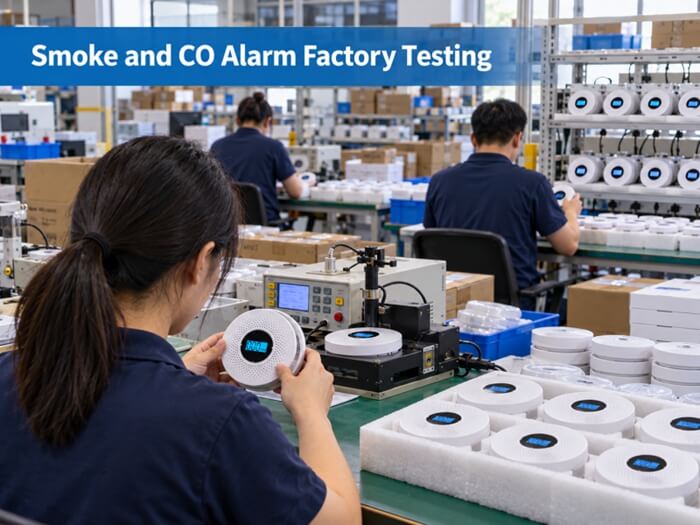
Another trap: some factories only test new detectors in perfect lab conditions. They skip humidity and temperature cycling. Once shipped to hot or humid regions, those alarms start acting erratically. Our testing process accounts for those real world conditions, so the performance stays steady long after installation.
We know procurement teams face tight deadlines and budget pressure. It can feel tempting to go with the lowest quote you find online. But fire safety products are one category where cutting corners will hurt your reputation later. If a product fails onsite, your customer will come back to you, not the assembly line worker who built it. Partnering with a manufacturer that runs full in-house testing gives you peace of mind and protects your brand reputation.
Our factory team handles all the testing and quality checks in our Shenzhen plant. We do not outsource testing work to third-party labs for every batch. We own our test equipment and train our technicians in house. Our company has 11 to 50 skilled team members focused purely on fire and security alarm products. Our product range covers smoke detectors, heat detectors, manual call points, gas detectors, alarm bells, strobe sirens and emergency lights. We are not just a trading company sourcing goods from multiple unknown factories. We build and test the fire safety devices ourselves.
We have many clients who visited our factory in person during trade shows. They get to watch these test stations running and hold our SR-821THS units in their hands. Even if you can’t travel to China right now, we can share live video tours of our testing workshop for serious bulk inquiries. We can also send product samples so your own quality team can run independent tests before you place a large order.
FAQ
- What hazards does the Sumring SR-821THS detect? SR-821THS detects both smoke from fire and invisible carbon monoxide gas. It uses two independent sensors: an infrared photoelectric sensor for smoke and an electrochemical sensor for CO.
- What power source does this smoke and CO combined detector use? It works with 3 pieces of 1.5V AA batteries. Batteries are not included in the package, and the device has a low battery alert reminder.
- Does every SR-821THS unit complete factory testing before shipment? Yes, every finished detector goes through full electronic function, sensor response and environmental checks, not just random batch sampling.
- Can Sumring provide OEM logo service for the SR-821THS smoke CO detector? OEM and ODM services are available for bulk orders. We can print your brand logo on the detector casing and customize packaging.
- What temperature and humidity range can this combined alarm work within? The working range is 0°C to 50°C, with relative humidity from 10% to 95%. Our factory tests all units across these conditions.
So what comes next if you want to know more about SR-821THS? Our sales team can share full datasheets, certification documents, lead time estimates and MOQ details for OEM branding. We can also walk you through custom packaging options for your target market. If you are looking for a reliable factory partner for combined smoke and carbon monoxide detectors, Sumring is ready to support your upcoming projects. Reach out to us today to discuss your order needs and get a tailored quotation.
Latest posts
-
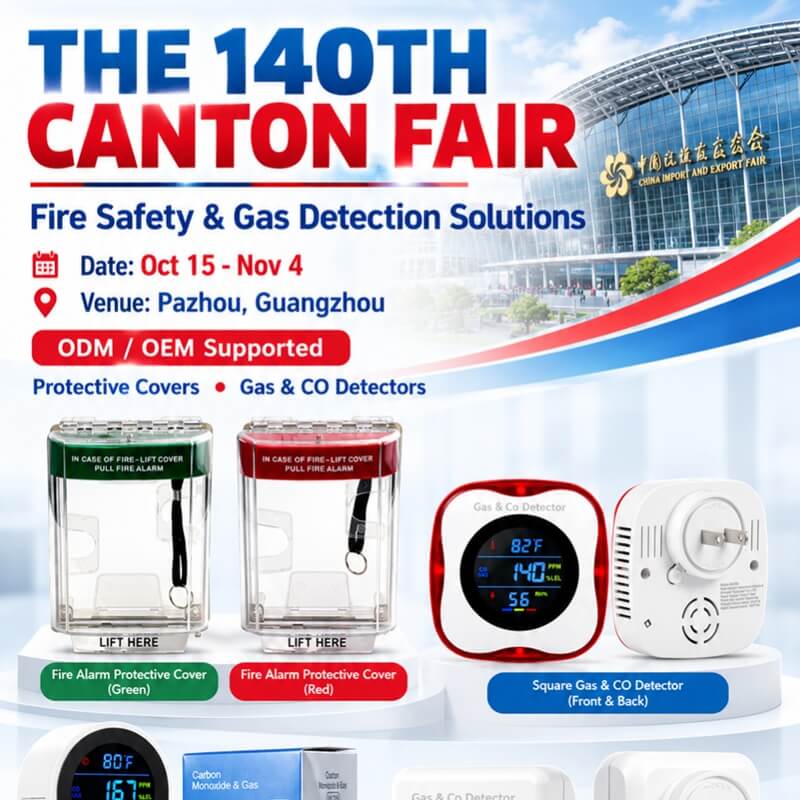 Sumring at Canton Fair: Fire Safety & Gas Alarm Solutions For Global Buyers
Do you like ?0
Read more -
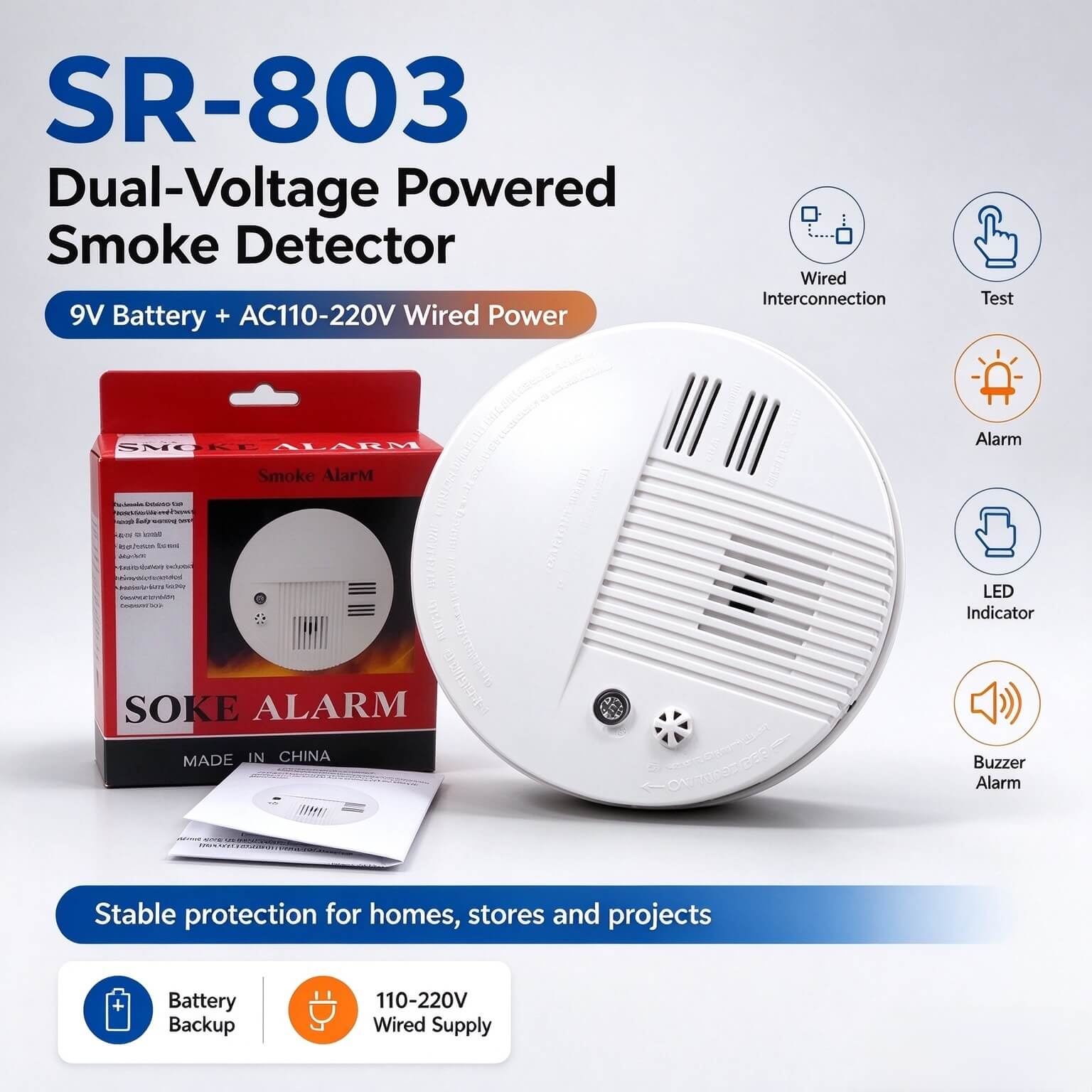 Double Sensor Smoke Detector: Benefits for Commercial & Residential Fire Safety
Do you like ?0
Read more -
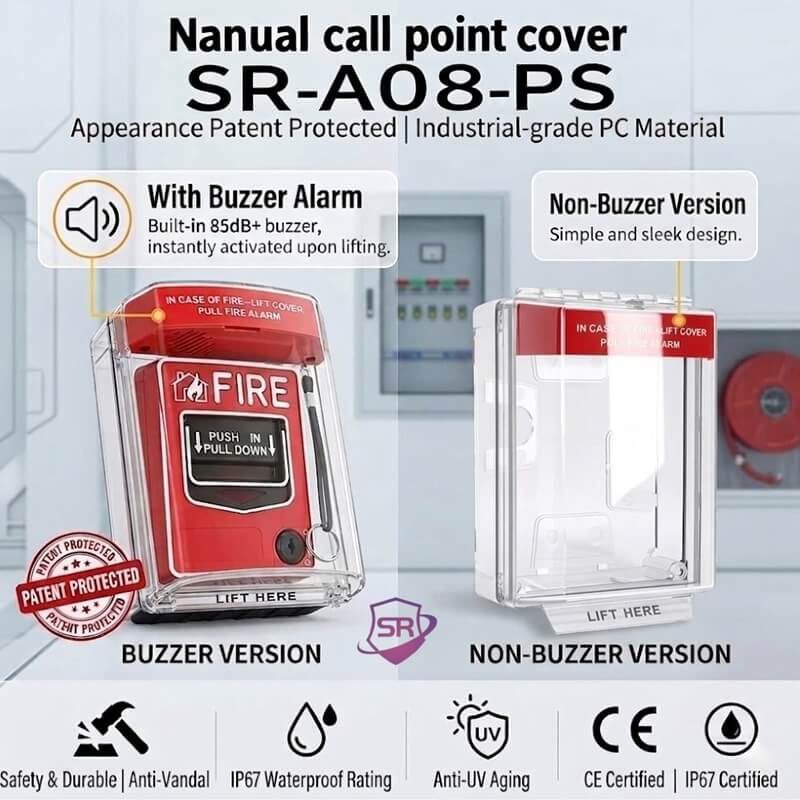 STI Cover vs SR-A08-PS Manual Call Point Cover: Cost & Feature Comparison
Do you like ?0
Read more -
 SR-820DHR Wireless 433 Smoke & Heat Detector Is Discontinued: Stock Alert & Dire
Do you like ?0
Read more -
 Fire Alarm Detector Costs Rise 20%: What Global Fire Safety Buyers Need To Know
Do you like ?0
Read more -
 2026 Mid-Autumn Festival: A Time For Family, But Fire Safety Never Takes A Break
Do you like ?0
Read more
Search
Hot Product