The Beep That Saved Us: Why a Carbon Monoxide Detector Is Non-Negotiable
The Beep That Saved Us: Why a Carbon Monoxide Detector Is Non-Negotiable
It was a frigid January evening in Chicago, and my family and I were settling in for the night. The furnace roared softly, keeping the house warm against the -10°F outside. My 7-year-old daughter, Lila, had complained of a headache after dinner, but we brushed it off as a long day at school. My husband, Mark, had felt dizzy while loading the dishwasher, but he blamed it on a tough workout at the gym. I had a dull ache behind my eyes, but I just assumed it was stress from work. We had no idea that a silent, invisible killer was lurking in our walls: carbon monoxide.
That’s when we heard it—a high-pitched beep, coming from the corner of the living room. At first, I thought it was the smoke detector, but it was different. It was slower, more insistent. I walked over to investigate and realized it was our carbon monoxide detector, flashing a red light. My heart dropped. I remembered reading about carbon monoxide poisoning in a parenting magazine a few months prior, and I knew we had to act fast.
I woke up Mark and Lila, grabbed our coats, and rushed outside. I called 911, and the fire department arrived within minutes. They used a special detector to test the air in our home, and the results were terrifying: the carbon monoxide levels were 300 parts per million—high enough to cause permanent brain damage or death if we had stayed inside for a few more hours. The source? A cracked heat exchanger in our furnace, which had been leaking carbon monoxide into our home for days.
We were lucky. So many families aren’t. According to the Centers for Disease Control and Prevention (CDC), carbon monoxide poisoning kills more than 400 people in the United States every year, and sends more than 50,000 to the emergency room. The scariest part is that carbon monoxide is invisible, odorless, and tasteless. You can’t see it, smell it, or taste it, but it can kill you in minutes.
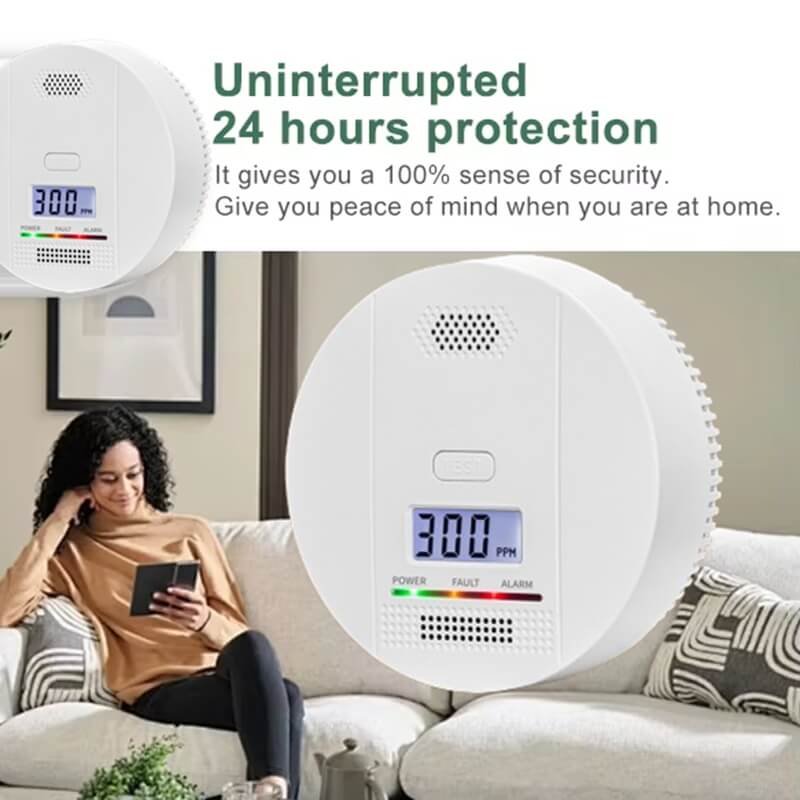
That’s why a carbon monoxide detector is so important. It’s like a silent guardian, watching over your family 24/7. When it detects even a small amount of carbon monoxide, it sounds an alarm, giving you time to get to safety and call for help. It’s not a luxury—it’s a necessity.
After our scare, I did a lot of research on carbon monoxide detectors. I learned that not all detectors are created equal. Some are battery-powered, while others are hardwired into your home’s electrical system. Some have digital displays that show the exact level of carbon monoxide in the air, while others just beep. I also learned that you should install at least one carbon monoxide detector on every level of your home, including the basement and the attic. You should also install one outside each bedroom door, so you can hear the alarm if you’re asleep.
We ended up buying three carbon monoxide detectors: one for the living room, one for the hallway outside our bedrooms, and one for the basement. We chose models with digital displays and battery backups, so they’ll still work if the power goes out. We also tested them every month, to make sure they’re working properly.
A few months later, we were sitting in our living room, watching a movie, when we heard the carbon monoxide detector beep again. This time, it was a low battery warning, not a carbon monoxide alert. But still, it was a reminder of how important that little device is. It’s not just a piece of plastic and electronics—it’s a lifesaver.
If you don’t have a carbon monoxide detector in your home, I urge you to buy one today. Don’t wait until it’s too late. Carbon monoxide doesn’t care if you’re rich or poor, young or old. It can happen to anyone, anywhere. But with a carbon monoxide detector, you can protect your family from this silent killer.
Remember: the beep of a carbon monoxide detector is not a nuisance—it’s a warning. It’s a second chance. It’s the sound of hope. Don’t ignore it.
Latest posts
-
 Smoke Detector or Carbon Monoxide Detector: Which is Better for Fire Safety?
Do you like ?0
Read more -
 Carbon Monoxide Detector vs Smoke Alarm: Key Differences for Home Safety
Do you like ?0
Read more -
 What Triggers a Carbon Monoxide Detector?
Do you like ?0
Read more -
 The Lifesaving Role of Carbon Monoxide Detectors in Hot Summer Kitchens
Do you like ?0
Read more -
 Why Your Carbon Monoxide Detector is Essential During Hot Summer
Do you like ?0
Read more -
 The Silent Killer at Home: Why Your Carbon Monoxide Detector is a Lifesaver
Do you like ?0
Read more
Search
Hot Product