Why Should You Fit a Protective Cover on Your Manual Call Point?
Have you ever walked through a busy warehouse, industrial yard or outdoor facility and spotted a scuffed‑up manual call point? Its casing chipped, buttons stuck, dirt and rain seeping into every small gap. Many fire safety buyers overlook one simple upgrade: a dedicated protective cover for manual call points. You might think, “The manual call point works fine on its own, why spend extra on another accessory?” That’s a fair thought. But plenty of importers, project contractors and property installers learn the hard way. Damaged manual call points trigger false alarms, stop working when emergencies strike, and pile up costly replacement claims from end‑users.
You know how frustrating it goes. You ship bulk fire alarm hardware for a large‑scale project. Everything looks good on paper. Six months later, emails flood your inbox. Site operators report broken call points caused by forklift knocks, heavy rain, dust build‑up or accidental bumps from passing staff. Repair costs stack up, client trust wears thin, and your profit margin shrinks for issues you could have avoided from day one.
What does a manual call point cover actually do? It is not just a clear plastic shell for show. Quality units like our IP67 rated covers shield manual fire call points against water, dust, physical knocks and unintended human contact. Lots of buyers only focus on the manual call point itself when placing orders. They check sensor specs, certification documents and unit pricing. Yet they forget about the harsh real‑world environments where these devices live. Indoor office spaces are gentle on fire hardware. Warehouses, loading bays, factory yards, coastal outdoor sites are totally different stories. Moisture, flying debris, vehicle impacts and even careless knocks from workers can wear down unprotected manual call points surprisingly fast.
What Happens When Manual Call Points Run Without Any Cover?
Let’s paint a clear picture. Leave a manual call point fully exposed out on site, and multiple risks creep in slowly.
First, moisture and dust intrusion. Rain, splashing water, factory dust, warehouse grit can get inside the device housing. Over time, internal circuits corrode. Corrosion leads to two bad outcomes: false fire alarms that distract on‑site teams, or total device failure when you need it most. No contractor wants to face that scenario. Imagine a real fire breaks out, and the manual call point cannot send an alarm signal because water ruined its internal parts.
Second, accidental mechanical damage. Forklifts, rolling carts, ladders and moving inventory regularly bump against wall‑mounted fire devices. Even human error counts. A worker rushing past can elbow the unit hard enough to crack its outer shell. Once the housing cracks, the whole alarm unit becomes vulnerable. Repairs or full replacements eat into project budgets.
Third, unwanted false activation. Staff or visitors can lean on, bump or even play with an exposed manual call point. Every accidental trigger pulls away emergency response resources. Site teams waste time verifying non‑existent fire events. In some regions, repeated false alarms can also bring fines for property operators.
Do these scenarios sound hypothetical? They are not. At Sumring, we have worked with fire‑safety importers for more than 15 years, manufacturing manual call points and matching protective accessories out of our China‑based production plant. We hear these real‑world site stories week after week from our global partners. Many customers only order protective covers after they run into avoidable site failures. Wouldn’t it make more sense to build this protection into your original order?
Core Benefits of Fitting an IP67 Manual Call Point Protective Cover
So what tangible upsides does a proper protective cover bring to your projects? Let’s break each benefit down in plain terms.
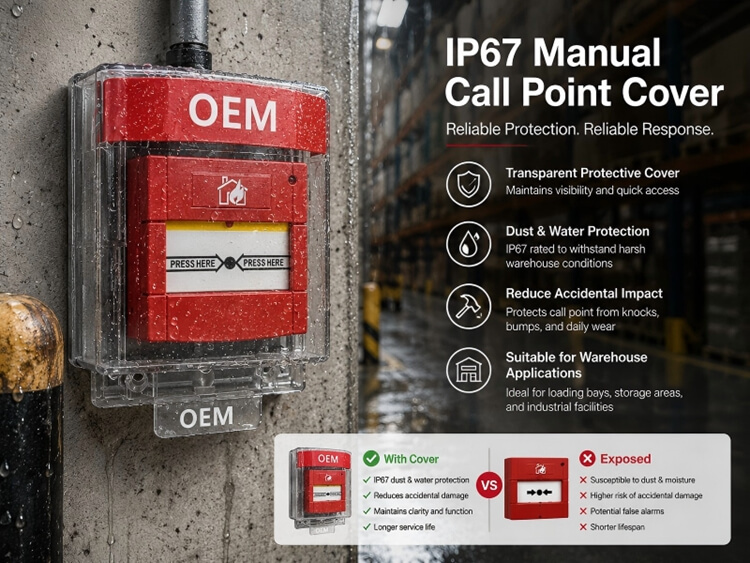
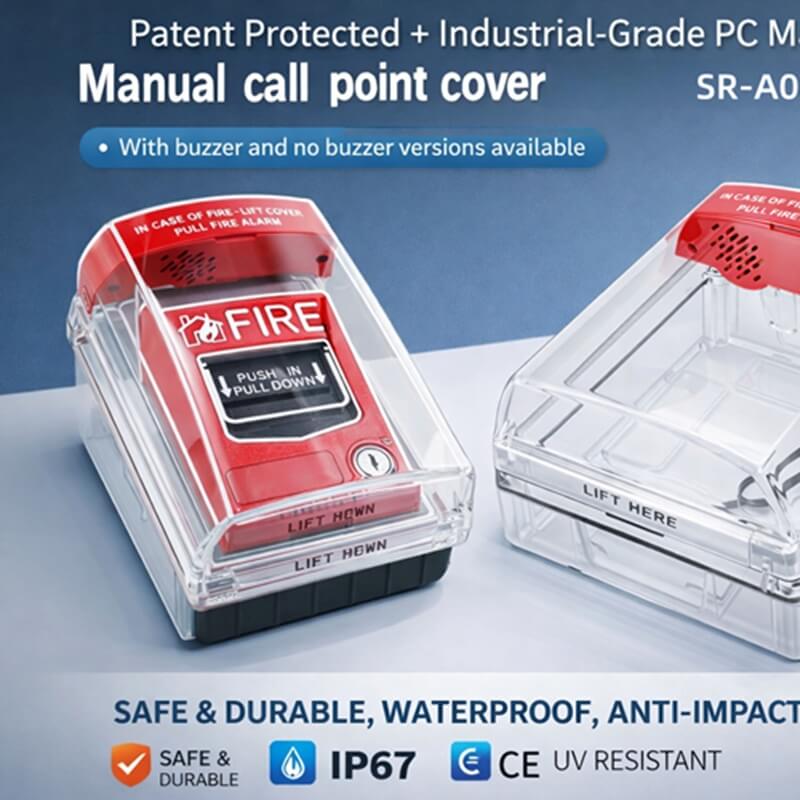
- IP67 dust and water resistance High‑grade manual call point covers deliver IP67‑level environmental defence. What does IP67 mean in simple language? The unit blocks fine dust particles completely, and stands up against temporary water immersion. That works wonders for outdoor walls, damp loading zones, wet factory yards and coastal locations with heavy rainfall. Your original manual call point may only hold an IP30 or IP40 rating by itself. Add this cover, and you instantly lift its real‑world site resilience, without swapping out the base fire alarm device.
- Guards against impact and physical knocks Robust transparent casing absorbs blows from warehouse equipment, ladders and moving stock. It takes the brunt of bumps so your underlying manual call point stays intact. You cut down site repair frequency and lower your after‑sales support workload for bulk orders. Less product damage means fewer returned units for your import business.
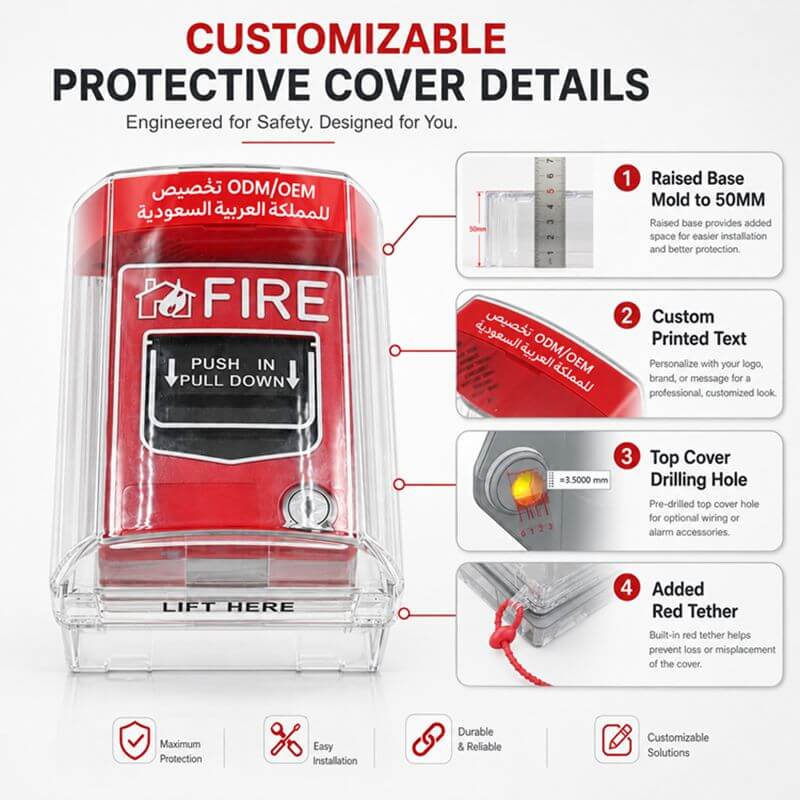
- Stops accidental false triggers The cover creates a physical barrier. Personnel cannot set off the fire alarm just by brushing against it. If a fire really occurs, users can still lift or open the cover quickly to activate the manual call point. Visible instructional labels on the housing guide people on exactly how to operate it under emergency stress. Safety does not get traded for protection.
- Full visibility remains intact These housings use clear transparent material. Site inspectors, maintenance staff and visitors can see the manual call point status at a glance. You do not need to remove the cover to complete routine visual checks. Inspectors can verify device condition without extra tools, which speeds up compliance audits for commercial and industrial sites.
- Extend overall service life of your manual call point Keep moisture, corrosive dust and physical harm away, and your installed manual call points will hold up for many extra years. Property owners get longer equipment lifespans. As a buyer, you deliver better value to your end‑clients, and build stronger long‑term business relationships.
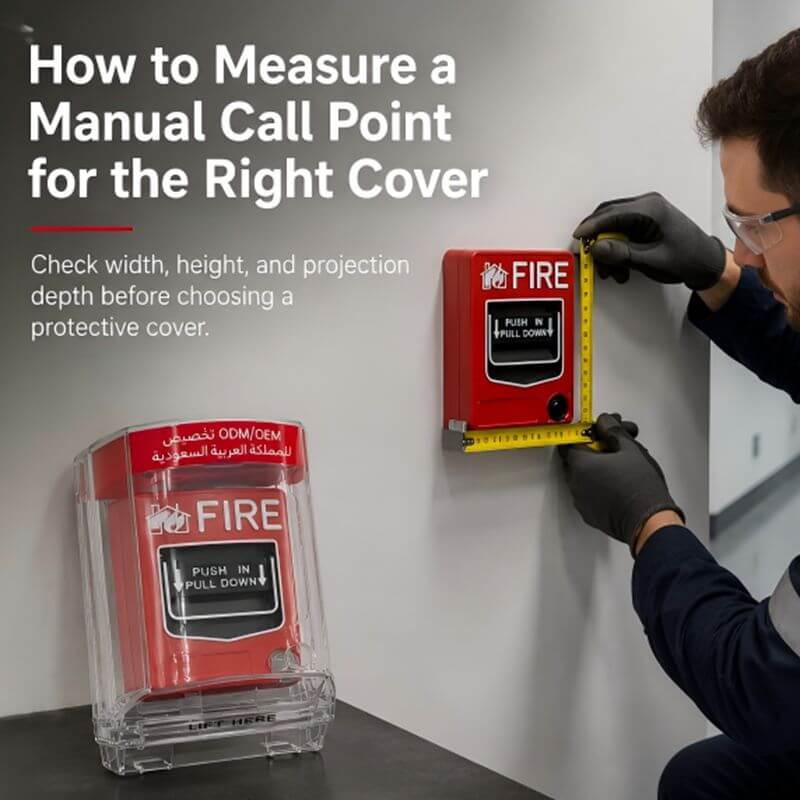
You might ask: will every manual call point fit into one of these protective covers? That is a key point to keep top‑of‑mind. Covers are not universal. Different manual call point models come with different height, width and protrusion dimensions. Before purchase, you need accurate physical measurements of your target call point unit. If dimensions mismatch, the cover will not mount properly on‑site. That is a common misstep we see among first‑time buyers. Some of our partners send us dimension drawings, and we support custom‑fit options for special‑size manual call point units for large‑volume orders.
Which Sites Gain the Most From Manual Call Point Protective Covers?
Is this accessory necessary for every single building? Not really. Clean indoor office spaces with low physical risk can often run fine without added covers. But for these site categories, protective covers turn into a very smart investment.
Warehouses and storage facilities: constant forklift movement, stacked goods and circulating dust create tough operating conditions. Loading bays and distribution hubs: regular exposure to outdoor rain, splashing water and vehicle impacts. Industrial manufacturing plants: airborne dust, humidity and moving machinery put stress on wall‑mounted fire hardware. Outdoor public installations: exposed to all weather shifts, from heavy rain to blowing dust. Coastal premises: salt‑laden moist air speeds up internal corrosion on unprotected fire devices.
Do you supply fire‑safety products for these kinds of projects? If yes, protective covers deserve a spot in your product proposal lists. You can offer them as an add‑on option for your clients. It helps you raise average order value, while solving real pain points for property operators.
Think about it. Your customers do not only buy fire‑alarm hardware to pass a one‑time compliance check. They want equipment that keeps working reliably year after year, out in real‑world working conditions. A manual call point that breaks after 12 months on‑site does not deliver genuine value, no matter how good its lab‑test specifications read.
Common Misconceptions About Manual Call Point Covers
Let’s clear up a couple of widespread myths floating around the fire‑safety supply space.
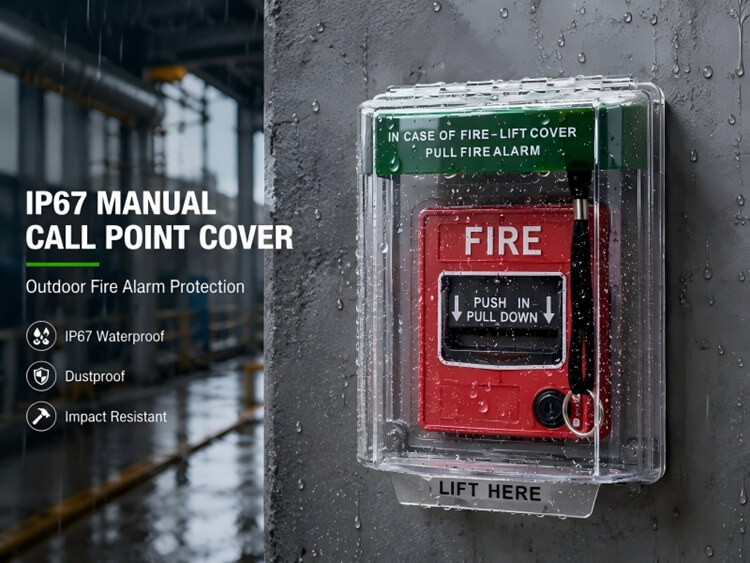
Myth 1: “A cover will slow down emergency response.” This is the most frequent concern we hear. Good‑quality protective covers are built for fast access. Clear printed instructions tell users to lift or open the housing before triggering the alarm. It only adds a tiny fraction of a second to activation time. In actual fire events, that minimal delay never outweighs the benefit of having a fully‑functional, undamaged manual call point ready to use. What good is an instant‑access call point if rain damage already broke it?
Myth 2: “All protective covers are basically the same.” Plastic quality, sealing gaskets, impact resistance and IP rating differ wildly across manufacturers. Low‑cost thin‑plastic knock‑offs crack easily. Their seals degrade after a few rain cycles, so they deliver almost no real‑world protection. Saving a little money upfront can cost you far more in client complaints later on. Always verify IP ratings and material specs before you place bulk orders.
Myth 3: “If my manual call point already has a high IP rating, I don’t need a cover.” High‑IP‑rated manual call points resist moisture and dust, yet they still remain vulnerable to hard physical impacts from forklifts and heavy site equipment. IP ratings do not measure impact strength. Even robust fire alarm units can crack when struck by heavy warehouse gear. A sturdy cover adds that extra‑layer physical defence nothing inside the call‑point unit itself can provide.
FAQ
Q1: Can I install a protective cover over any existing manual call point?
A1: No, covers are not universal. You need accurate width, height and wall‑protrusion measurements of your manual call point. Mismatched sizes lead to mounting gaps or failed installation. Custom‑fit solutions are available for bulk project orders.
Q2: Does an IP67 manual call point cover work in heavy rain and coastal salt‑air environments?
A2: Yes. Proper IP67‑rated housings block rain ingress. The sealed gasket design also slows salt‑air corrosion, though routine visual inspections are still recommended for coastal locations.
Q3: Will the protective cover make it harder for inspectors to check my manual call points?
A3: Not at all. Transparent casing lets inspectors view device status without removal. Full access is quick when physical inspection or testing is required.
Q4: Can end‑users still trigger the fire alarm quickly during emergencies with the cover fitted?
A4: Yes. Our covers feature clear printed operation prompts. Users lift or flip open the housing in seconds before activating the manual call point. Emergency function is never blocked.
Q5: What issues come with cheap low‑quality manual call point covers?
A5: Thin brittle plastic cracks under minor impact. Poor‑quality gaskets break down fast, letting dust and water inside. These cheap units offer little practical protection and often trigger client complaints.
If you source fire‑safety accessories for resale, commercial tenders or industrial property roll‑outs, do not overlook manual call point protective covers as part of your solution package. Sumring has over 15 years of OEM and ODM manufacturing experience for fire alarm hardware out of our China production base. We supply IP67 manual call point protective covers with full documentation support for global importers. Drop us a message to get dimension sheets, sample pricing, and technical data so you can evaluate these accessories for your next project order.
Latest posts
-
 How to Measure a Manual Call Point for the Right Cover ?
Do you like ?0
Read more -
 Protective Cover SR‑A08‑PS: Real Saudi Arabia OEM Custom Project From Sumring
Do you like ?0
Read more -
 What’s the Manual Call Point Cover Made Of? Let’s Talk Industrial-Grade PC Mater
Do you like ?0
Read more -
 What Are Transparent Protective Covers for Manual Call Points?
Do you like ?0
Read more -
 how about fire alarm pull station cover with horn ?
Do you like ?0
Read more -
 How important is a manual call point cover in a fire alarm system?
Do you like ?0
Read more
Search
Hot Product