SR‑915 Smart WiFi Gas Detector vs Traditional Gas Alarm: Which Fits Your Commercial Kitchen Project?
You have probably run across this dilemma countless times as a fire and gas safety buyer. A client sends out a tender for commercial kitchen gas safety. They need gas leak protection for restaurants, hotel kitchens or catering facilities. The budget sheet leaves two clear paths: grab low‑cost traditional standalone gas alarms, or step up to smart WiFi gas detectors like the SR‑915.
You know how it goes. Traditional units carry a smaller upfront price tag. They look simple on spec sheets, so they win plenty of bids. But how many of those projects circle back with headaches later on? Think about it. A restaurant kitchen suffers a gas leak after closing hours. The old‑style gas alarm sounds its loud local siren — yet no staff are on‑site to hear it. Minor gas buildup turns into a dangerous hazard, and nobody gets notified until it is almost too late. Have you ever dealt with client complaints stemming from that exact scenario?
That gap between basic on‑site alarm and real‑world safety performance is where the whole comparison starts. Lots of procurement teams only compare raw sensor readings and unit cost when evaluating gas alarms. They skip over day‑to‑day operational differences that hit end‑users hard long after installation finishes.
What Does A Traditional Gas Alarm Actually Deliver On Site?
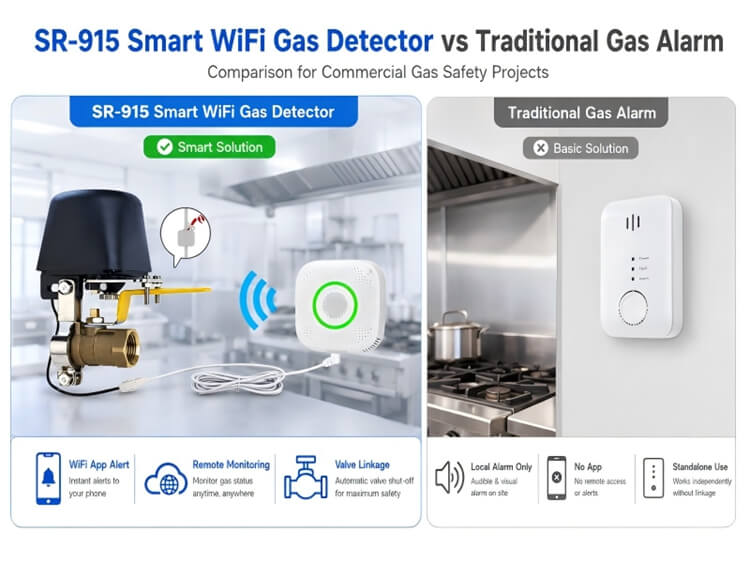
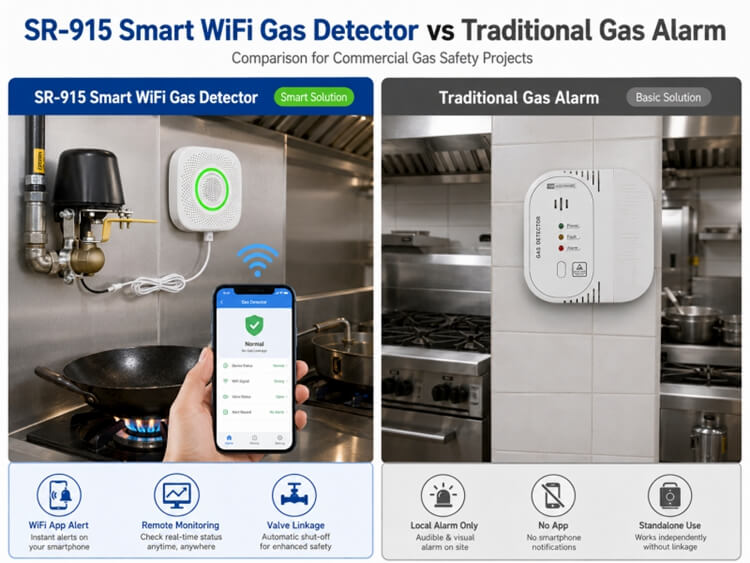
Let’s start with the familiar traditional gas alarm, the basic solution you see in thousands of food service spaces. These devices do one core job: sense gas concentration in the surrounding air. When gas levels cross the preset threshold, they trigger loud beeps and flashing LED lights right at the wall‑mounted unit. That is the full scope of their capability.
You get local audible and visual alarm only. No smartphone alerts. No remote status look‑up. No built‑in signal to drive an automatic gas valve shut‑off. The hardware works completely standalone. If nobody stands within earshot when danger appears, the alarm’s warning does very little good.
Do not get me wrong. Traditional gas alarms fill a place in the market. For small occupied spaces where people stay present 100% of the time, they can satisfy basic compliance checklists. But commercial kitchens rarely fit that narrow profile. Kitchens close overnight; staff go home for holidays; shift changes leave rooms empty for hours at a stretch.
Imagine a busy hotel kitchen. Staff finish their evening shift, lock the doors and drive home. A tiny gas fitting develops a slow leak overnight. The traditional gas alarm screams away on the kitchen wall. Every sensor works correctly. Still, zero people hear the warning. Risk builds unseen until maintenance walks in next morning. That is not a hypothetical horror story; Sumring’s technical support team hears versions of this story from global importers every single month.
Traditional units also give zero visibility for facility managers. You cannot check device health from an office. You cannot confirm if the alarm is still powered and functional without physically walking up to each unit. If a sensor drifts or power fails, the problem stays hidden until a scheduled manual inspection rolls around. For multi‑location restaurant chains, that manual check work adds up to huge labour bills.
SR‑915 Smart WiFi Gas Detector: More Than Just Another Gas Sensor
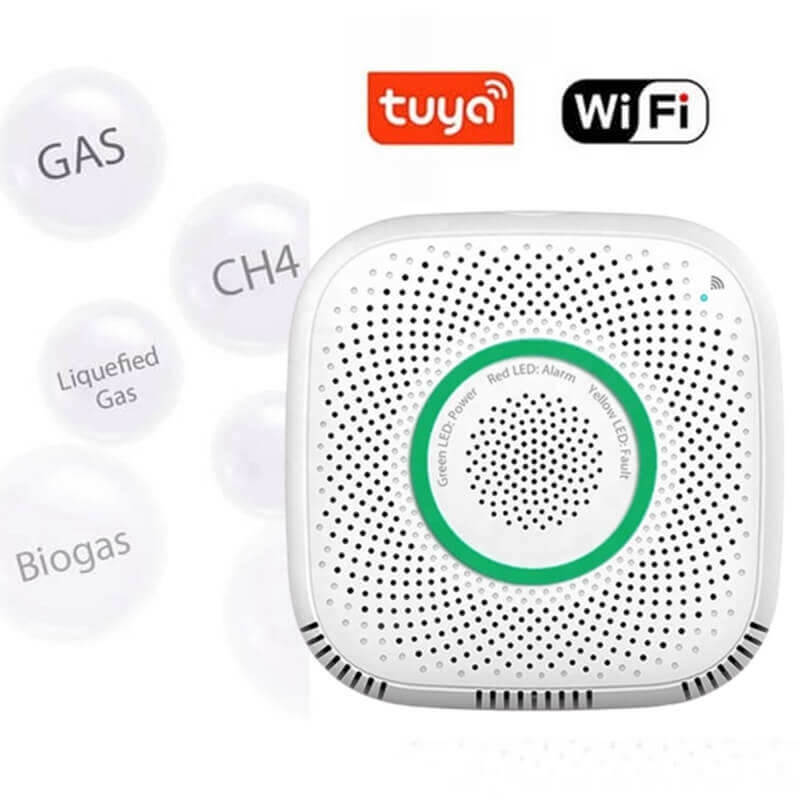
Now let’s turn to the SR‑915 Smart WiFi Gas Detector, our smart solution built for commercial gas safety projects. It still includes a high‑quality gas sensor, just like conventional alarms. It will sound local sound and light alerts when gas leaks happen, same as older models. But that is merely its baseline function. The real value sits in the extra layers built for modern commercial sites.
First up: WiFi app alerts. When gas leakage triggers the SR‑915, push notifications land straight on designated smartphones. This happens whether staff stand beside the unit or kilometres away from the premises. Closing time, weekends, public holidays — alerts still reach responsible people. You do not need someone physically present in the kitchen to catch the hazard warning.
Then we have remote monitoring. Facility teams can pull up real‑time device status through the mobile app any time, anywhere. Want to confirm if all kitchen gas detectors remain online before a long holiday break? No need to send technicians driving across town. A few taps on a phone screen show power status, WiFi connection health and current gas readings. You spot offline or faulty units early, before a dangerous situation develops.
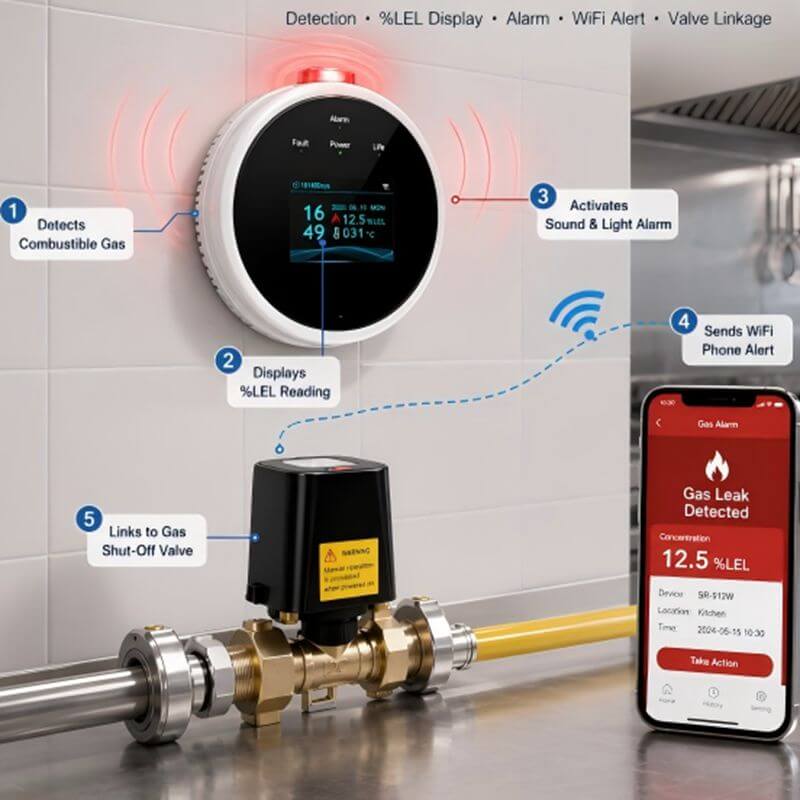
And one feature that turns heads for commercial kitchen projects: valve linkage. The SR‑915 can communicate with a compatible gas valve actuator. When dangerous gas levels register, the system sends a signal for automatic valve shut‑off. Gas supply cuts off right away. This action happens even if no human reads the phone alert immediately. It stops ongoing gas flow at the source, lowering explosion and poisoning risk dramatically.
You might be thinking; is automatic shut‑off really that big of a difference? Let’s draw a simple analogy. A traditional gas alarm acts like a smoke horn that only sounds inside an empty building. It shouts warnings, but cannot fix the hazard itself. SR‑915 does both: it sends out urgent warnings and takes physical action to contain the leak.
These features do not remove the need for regular maintenance, of course. Smart hardware still needs sensor testing and occasional checks, just like any gas safety device. Smart functions do not make a unit maintenance‑free. That is a point we always highlight for our buying partners.
Where Do You Pick SR‑915 Over Traditional Gas Alarms?
No single gas alarm fits every job. Traditional gas alarms still make sense for certain use cases. Let’s break down which project types lean toward each option, so you can make solid recommendations for your own clients.
Go with traditional gas alarms for these scenarios:
- Small‑size rooms constantly occupied by on‑site personnel
- Low‑risk auxiliary storage rooms where staff stay nearby full‑time
- Tight‑budget minor retrofits that only require minimum code compliance
Lean toward SR‑915 Smart WiFi Gas Detector when your project matches any of these:
- Commercial restaurant, hotel, and catering kitchens that sit unoccupied overnight
- Multi‑site food service chains, where managers oversee dozens of separate locations
- Premises that install automatic gas shut‑off valves as part of their safety specification
- Sites where fast response to after‑hours gas leaks ranks as a top priority
- Property operators who want to cut time spent on manual on‑site device status checks
Have you had clients come back and say their basic gas alarm setup felt incomplete after installation? Many importers tell us that clients pass on smart features at quote stage to save short‑term costs. Months later, they reach back wanting to upgrade, once they understand the limits of standalone alarms. That pattern repeats across dozens of global markets.
Key Head‑to‑Head Differences In Plain Language
Let’s lay out the core contrasts in simple bullet points, so you can reference these details for your proposals and client conversations.
Traditional Gas Alarm (Basic Solution)
- Local audible and visual alarm only; no remote notification
- No mobile app access; no remote status viewing
- Fully standalone operation; cannot trigger automatic gas valve shut‑off
- End‑users depend entirely on people being physically present to hear warnings
- All device health checks require in‑person site visits
SR‑915 Smart WiFi Gas Detector (Smart Solution)
- Local sound‑light alarm plus instant WiFi app push alerts to assigned phones
- Remote monitoring: check real‑time gas readings, device power and connection status via mobile app anytime, anywhere
- Valve linkage support: trigger automatic gas shut‑off with matched valve actuator during gas leak events
- Reduces risk during unoccupied hours; warnings reach teams even when nobody is on‑site
- Identify offline or faulty devices remotely, cut unnecessary site travel for routine status confirmation
It is worth pointing out one quick note. SR‑915 relies on stable on‑site WiFi network connection for smart functions. If a location suffers constant WiFi outages, remote alerts and valve linkage features will not work as intended. Local sound‑light alarm still keeps working even without WiFi, so baseline safety never disappears. That is a key detail to pass to your installers and end‑customers.
You might wonder; does adding WiFi functions make the hardware far less reliable on tough kitchen sites? Commercial kitchens get steamy, greasy, and experience wide temperature swings. Our engineering team designed SR‑915 to stand up to those typical kitchen environmental conditions. We have shipped these units out of our Sumring China manufacturing base to commercial projects around the world for years, and we collect real‑world field feedback from importers on an ongoing basis.
Is The Higher Up‑Front Cost Of SR‑915 Worth It For Your Projects?
Price always weighs heavy on procurement decisions. SR‑915 carries a higher per‑unit cost compared to basic traditional gas alarms. That fact is undeniable. So how do you decide when the extra spend makes sense?
Ask yourself one practical question: what cost would your client face if an undetected gas leak unfolds on their property? Property damage, business downtime, insurance complications, and potential harm to staff or guests all carry heavy costs. For many commercial food‑service operators, those risks dwarf the difference in hardware price between basic and smart gas detectors.
Still, smart WiFi gas detectors are not a must‑buy for every single job. If your client runs a small workshop that never sits empty, traditional alarms can deliver acceptable protection. But for most commercial kitchen builds and renovations, the remote alerts and valve linkage turn into practical safety assets, not fancy extras.
A fair number of our partner importers use a mixed approach. They fit SR‑915 units for high‑risk kitchen zones, and deploy traditional gas alarms in lower‑risk back‑of‑house spaces. This tactic balances project budget and safety performance, and it works well for many tender submissions.
FAQ
Q1: Will SR‑915 local alarm still work if the site WiFi network goes down? A1: Yes. The built‑in audible and visual local alarm functions operate with or without WiFi. Only app notifications, remote monitoring and valve linkage features depend on active WiFi connection.
Q2: Can SR‑915 pair with any gas valve actuator for automatic shut‑off? A2: It works with Sumring‑compatible valve actuators. Always cross‑check interface specifications before ordering mixed hardware; mismatched units cannot achieve linkage function. We provide full spec sheets for project evaluation.
Q3: Do end‑users need paid monthly subscriptions to use the SR‑915 mobile app? A3: No subscription fees apply. Core app features including push alerts and remote status viewing come included with the hardware purchase.
Q4: Can SR‑915 detect both natural gas and LPG (liquefied petroleum gas)? A4: The SR‑915 supports common commercial gas types. Confirm target gas type during ordering, so we supply units fitted with the correct sensor configuration for your project location.
Q5: How much extra installation work does SR‑915 require versus traditional gas alarms? A5: Physical wall mounting follows similar steps. Installers need to complete simple WiFi pairing during setup. For valve linkage projects, technicians also run connections to the matched gas valve actuator. Standard electricians can complete this work following our supplied installation guides.
If you source gas safety hardware for restaurant refurbishments, hotel tenders or commercial facility roll‑outs, you cannot afford to overlook how smart gas detectors change real‑site safety outcomes. Sumring holds more than 12 years of fire and gas alarm manufacturing experience at our China production facility. We supply SR‑915 Smart WiFi Gas Detectors with full technical documentation, sample options and OEM support for global importers. Reach out to our team today to grab spec sheets, sample pricing and test data for your next commercial gas safety project.
Latest posts
-
 Does This WiFi Gas Detector Work With Valve Actuator For Automatic Gas Shut‑Off?
Do you like ?0
Read more -
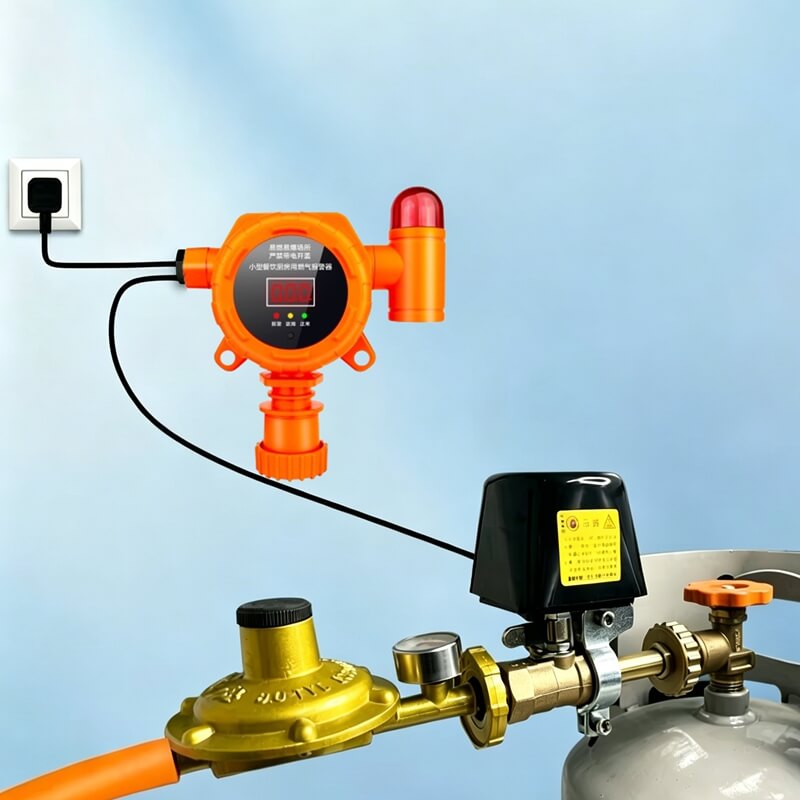 Can Commercial Kitchen Gas Detectors Output Relay Signals to Connect Gas Valves
Do you like ?0
Read more -
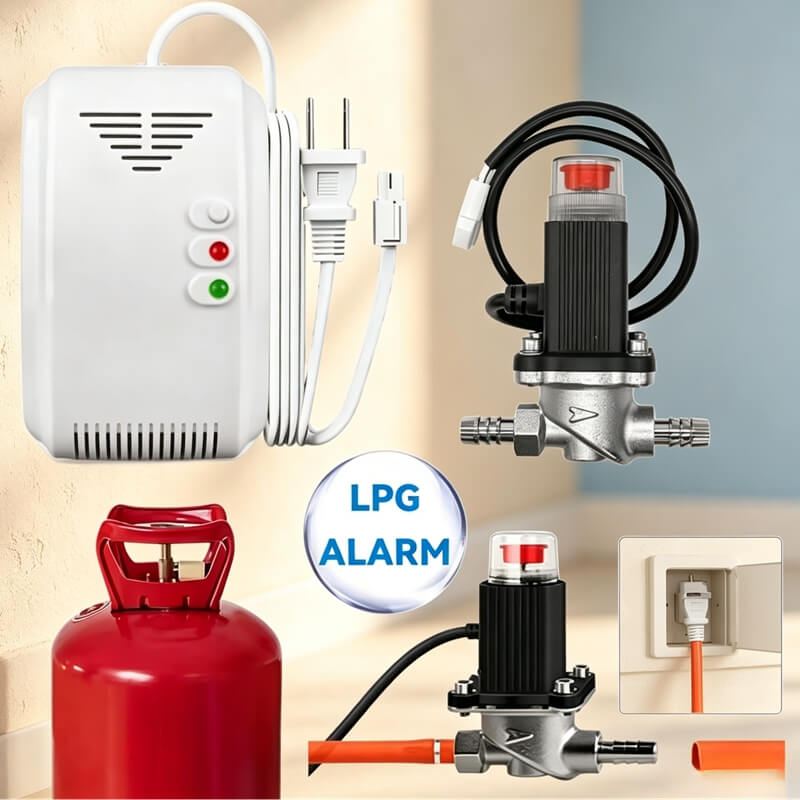 What Does a Solenoid Valve Do With a Gas Detector, Anyway?
Do you like ?0
Read more -
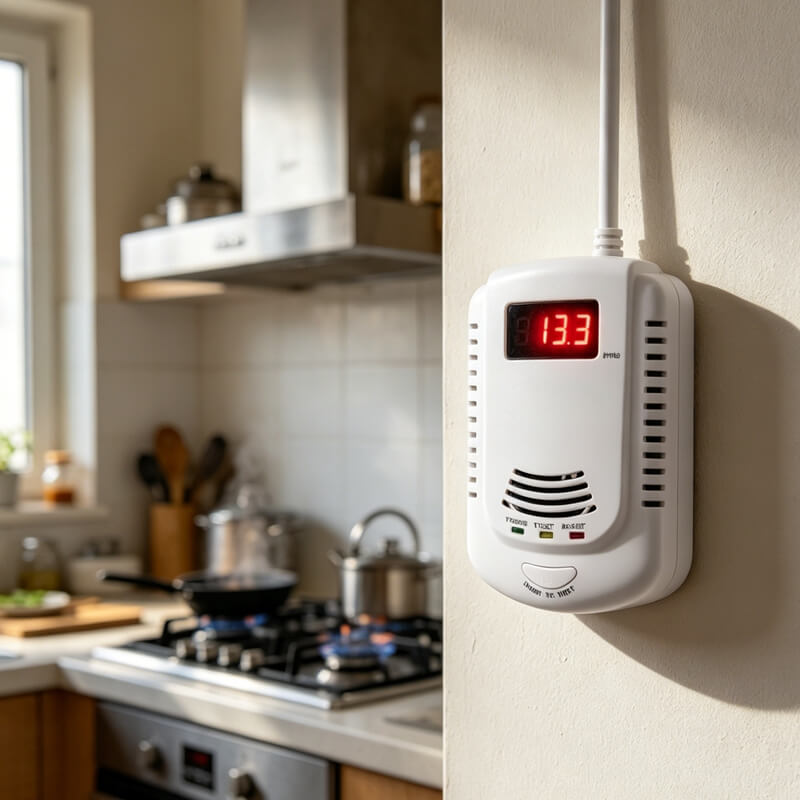 Is this gas detector suitable for home kitchens? A Complete Buying Breakdown
Do you like ?0
Read more -
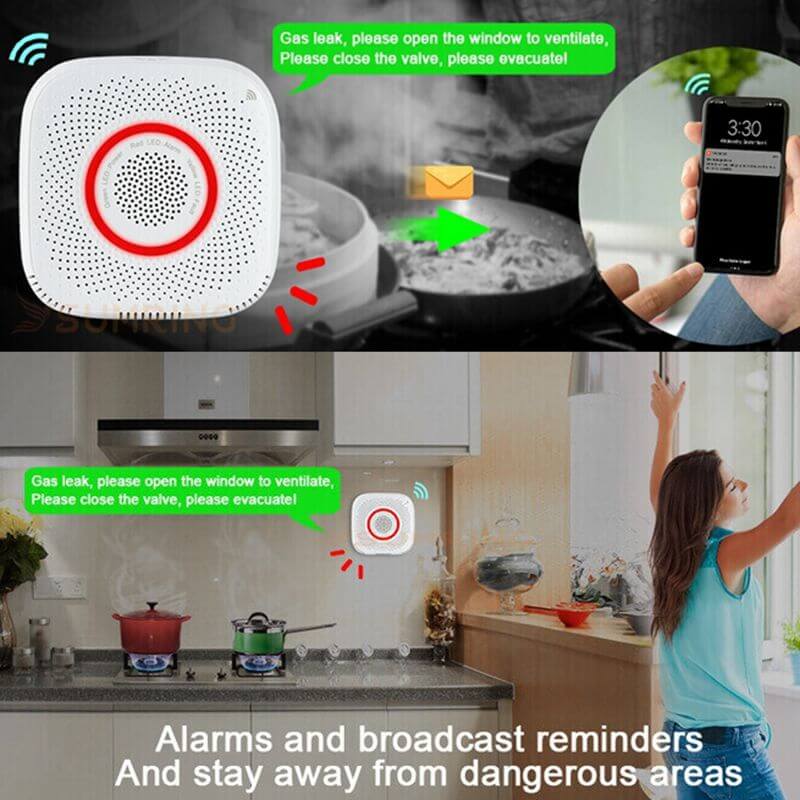 A Late-Night Gas Scare: How One Smart Gas Detector Saved a Family’s Home
Do you like ?0
Read more -
 WiFi Gas Alarm: The Lifesaver That Saved a Family from a Silent Gas Disaster
Do you like ?0
Read more
Search
Hot Product